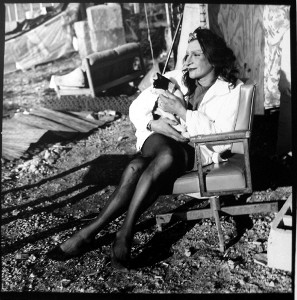
Shero of the Week- Sylvia Rivera

Every Sunday, we discuss a woman who inspires us. This week’s shero is Sylvia Rivera. Sylvia Rivera was an American transgender activist of Puerto Rican, Venezuelan, and Mexican descent. Born Ray Rivera Mendoza, he (sic) left home at the age of ten, and lived and worked on the streets of New York City, dressing in drag. Sylvia and other young hustlers and drag queens were subjected to violence and police brutality, often arrested and beaten and raped within the cells. This situation came to a head during the Stonewall Riots, a catalyst for the modern-day gay rights movement.

The Stonewall Inn was a popular gay bar in Greenwich Village with a diverse racial mix. The bar was regularly raided by the police, and female patrons would be arrested for not wearing at least three items of “feminine clothing” and males for dressing in drag. In June 1969, police raided the Inn, but this time patrons fought back. Sylvia Rivera is said to have thrown the first bottle at the police, and soon Molotov cocktails were thrown and a parking meter was used as a battering ram. The crowd had the police trapped inside for at least forty-five minutes, as the patrons fought for the right to be themselves without harassment. Sylvia has been quoted as saying that she felt that the revolution had finally arrived.

In 1970, Sylvia was a founding member of the Gay Liberation Front, and the Gay Actvist Alliance (GAA), and was involved in the campaign to pass the New York City gay rights bill. Never attempting to fit in to the mainstream, Sylvia wore a dress and high heels when she tried to force her way into a closed door session concerning the bill. The GAA soon dropped transvestite and drag issues from their campaign in order to appear more conventional and “normal.” Disillusioned and disappointed, Sylvia backed away from the GAA.

During that same year, Sylvia formed a group called STAR (Street Transvestite Action Revolutionaries) with African-American transgender activist Marsha P. Johnson. STAR fought for transgender rights and also provided practical help, opening STAR House to provide shelter for homeless transgendered youth. STAR lasted for two years, and was the first of its kind in NYC. Significantly, STAR formed alliances with other youth groups of color, such as the Black Panthers.

By the late 1970s, Sylvia was homeless and broke due to substance-abuse issues. By 1997, she was living at the Transy House Collective, which was inspired by and based on STAR, and was run by transgendered people. Here, she provided support for transgendered youth, restarted her activism, and reformed STAR in 2000. She worked towards goals such as the Human Rights Commission being more inclusive of trans issues.

Sylvia Rivera died of liver cancer, but conducted meetings with other activists from her hospital bed even a few hours before her death. She was a courageous lifelong activist, fighting for the rights of those excluded not just from the mainstream gay rights movement- people of color, low income queers, trans people, and homeless youth. In her honor, the Sylvia Rivera Law Project has been established to: “guarantee that all people are free to self-determine their gender identity and expression, regardless of income or race, and without facing harassment, discrimination or violence.”

Shero of the Week- Kathleen Hanna

Every Sunday, we discuss a woman who inspires us. This week’s shero is Kathleen Hanna. Shelly talked about why Kathleen Hanna is awesome and recommended that we check out the above documentary on the The Herstory of Riot Grrrl. Here’s some information about her from her Wikipedia page:

Kathleen Hanna (born November 12, 1968) is an American musician, feminist activist, and punk zine writer. In the early- to mid-1990s she was the lead singer of feminist punk band Bikini Kill, before fronting Le Tigre in the late 1990s and early 2000s. In 1998, Hanna released a lo-fi solo album under the name Julie Ruin and since 2010 has been working on a project called the Julie Ruin. A documentary film about Hanna was released in 2013 by director Sini Anderson, titled The Punk Singer, detailing Hanna’s life and career, as well as revealing her years-long battle with Lyme disease. Hanna is married to Adam Horovitz of the Beastie Boys.

Kathleen Hanna is well known for being an outspoken radical feminist; many people often credit her for helping launch third-wave feminism when she helped create the riot grrrl punk movement. At Bikini Kill concerts, Hanna would encourage and enforce that women were to move to the front of the stage to avoid harassment from male concert goers. The “girls to the front” concept was symbolic in helping women feel comfortable at concerts and more welcome to participate. In 1991, Hanna performed with Bikini Kill at the Abortion March in Washington, D.C. before the Planned Parenthood v. Casey trial. She has been a major pro-choice advocate and was quoted saying, “It’s about women not dying in back-alley abortions, but it’s also about women saying: ‘My life is worth it, too. I deserve to have control over my life and my health care.’ Imagine if a man was told, ‘You can’t make the decision to have a vasectomy.'” A key feature to riot grrrl music was to empower and encourage women to appreciate each other and rise against oppressive patriarchy. Kathleen Hanna helped mold that central theme of third-wave feminism through her works and helped to keep the movement documented and alive through video, guarding her legacy in order to preserve the importance of the movement.

In DeFENCE of Hope Indiegogo!

We now have an Indiegogo to help raise money to build a fence around the Hope Clinic parking lot. Donations in whatever amount you can afford would be greatly appreciated! Here’s the link.

Short Summary
Many family planning clinics around the country have safe and accessible entry into their establishment.  The Hope Clinic in Granite City, IL, just a short drive away from St. Louis, MO, does not currently have such protection for itself and for its visitors.  Anti-choice protestors have created a hostile atmosphere for women in search of the clinics services, and we at Faces of Feminism – St. Louis (FoF) want to help shelter these women and help the clinic have safer access for all who enter their doors!  And we want to build them a tall privacy fence to help!

FoF was founded in Spring 2014, and is currently seeking 501c3 status with the state of Missouri, and acts on behalf of achieving gender equality in rights, liberties, justice, and protections in the St. Louis area and across state lines.  We welcome all genders, orientations, ages, and abilities for collaborative efforts through art, fundraising, literature, awareness campaigns, and petitioning local and state governments to help bring equality into reality.

Contributing to our In DeFENCE of Hope campaign will help ease the need for personal escorts trained by NARAL to help visitors through the hostile crowd into the clinic.  This also helps to protect the clinics staff and to create another buffer of protection and privacy with a solid and sturdy tall fence.

What We Need
All money will be spent on materials and labor for a tall wooden privacy fence surrounding the clinic as estimated by a local contractor.  The money is being held as an umbrella project under the Workers Education Society which has a 501c3 status in Missouri.

The Impact
Women who are exercising their right to reproductive health services are entitled to privacy and protection!  Your contribution will help ensure their privacy and protection.

Risks & Challenges
The challenges we predict will mostly be the political and social pressure of the protestors and their supporters who would rather see all reproductive health clinics disappear all together.  We are prepared for the counter campaigning by assuring all that the campaign is not an attempt to silence or harass the protestors, but to stand for the privacy and protection of the clinics patrons.

Other Ways You Can Help
Like us on Facebook!  Follow us on Twitter!  Tell everyone about the campaign, and stay in the loop for our future campaigns and fundraisers.

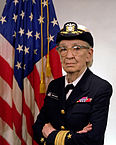
Shero of the Week- Grace Hopper

At every Sunday meeting, we discuss a woman who inspires us. This week’s shero is Grace Hopper. From her Wikipedia page:

Grace Murray Hopper (December 9, 1906 – January 1, 1992) was an American computer scientist and United States Navy rear admiral. A pioneer in the field, she was one of the first programmers of the Harvard Mark I computer, and invented the first compiler for a computer programming language. She popularized the idea of machine-independent programming languages, which led to the development of COBOL, one of the first high-level programming languages. She is credited with popularizing the term “debugging” for fixing computer glitches (inspired by an actual moth removed from the computer). Owing to the breadth of her accomplishments and her naval rank, she is sometimes referred to as “Amazing Grace”. The U.S. Navy destroyer USS Hopper (DDG-70) is named for her, as was the Cray XE6 “Hopper” supercomputer at NERSC.

Mission

To create a space for people to live safely and authentically, to stand for equal opportunity, liberty, and protections regardless of sex or gender identity and expression, and to be the whistleblower when gender discrimination is present.

We acknowledge the systems of oppression that manifest the various forms of gender discrimination and sexism. In our quest to collectively dismantle these systems, FoF-STL strives to uphold the ideal of inclusivity to members who are marginalized along economic, educational, racial, sexual, gendered, accessibility, and other lines.

All in. All safe. All free.